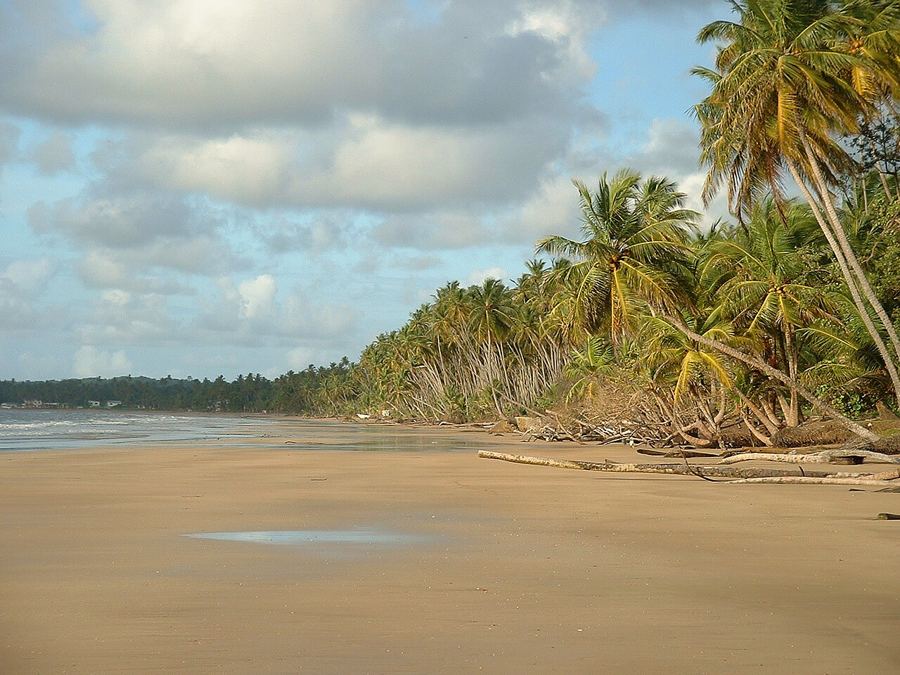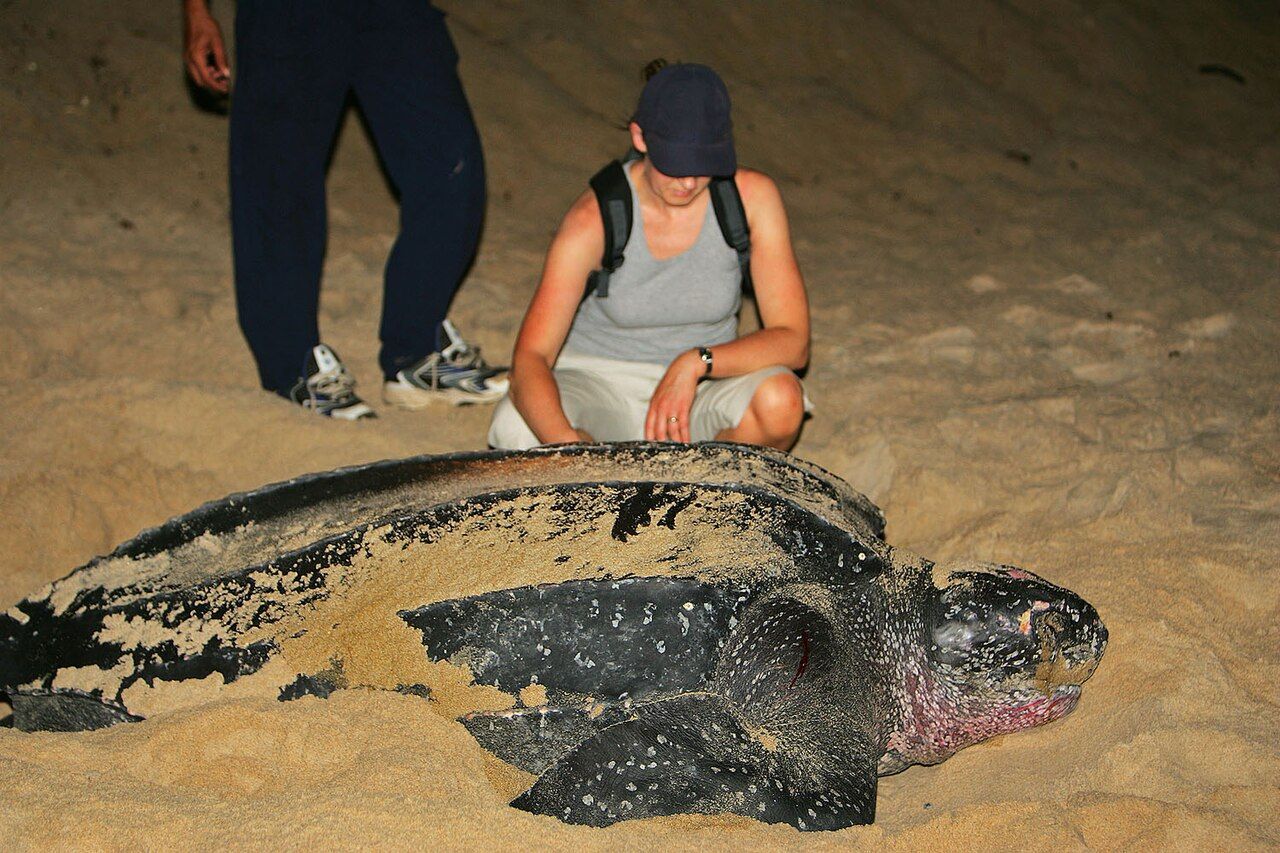
Late on a still night on Trinidad's east coast, a dark shape rises from the surf and begins to drag itself up the beach. It is a leatherback turtle, the largest living turtle and one of the largest reptiles in the world, coming ashore to lay her eggs in the same kind of beach where she hatched decades ago. Trinidad is one of the most important nesting places for leatherbacks anywhere, and two beaches in particular, Matura on the east coast and Grande Riviere on the north coast, draw visitors who want to see them.
It is a simple experience in one sense: you wait in the dark and watch. It is also a fragile one, and the rules that surround it exist because these animals are endangered. Follow them and you will see something few people ever do.
The nesting season
Leatherbacks nest on Trinidad's beaches roughly from March to August, with the busiest weeks usually falling around April to June. A female may come ashore several times in one season, laying a clutch of eggs every week or two, and then not return for a couple of years. Most nesting happens at night, often a few hours after dark, although timing varies with the tide and the turtle.
Nothing is guaranteed. Some nights are busy, with several turtles on the sand at once; others are quiet. Rough seas, bright moonlight and plain chance all play a part. Allow for more than one evening if seeing a turtle matters a great deal to you.
Permits and protected beaches
Matura Beach and Grande Riviere are among the beaches declared protected during the nesting season. To visit them at night in that period you need a permit, and access is usually organised alongside trained local guides who patrol the beach. Permit arrangements, hours and fees change, so check before you go, and do not simply turn up at a protected beach after dark expecting to wander in.
The local patrol groups grew out of the communities near the beaches. Years ago, turtles were often killed for meat and eggs taken; today villagers patrol the sand, count nests, measure turtles and guide visitors. Their work is a big part of why leatherback numbers here have held up, and the visits they lead help to pay for it. Listening to their briefing before you go down to the water is part of the experience, not a formality.
Listening to their briefing before you go down to the water is part of the experience, not a formality.
Red light and quiet
Turtles are easily disturbed while they are coming ashore and choosing a spot. Bright light can make a female turn back to the sea without laying, and it confuses hatchlings, which use the brighter horizon over the water to find their way. The guides will usually only bring visitors close once the turtle has started laying, when she is less likely to be put off.
- Use only a dim red light, and only when a guide says it is fine. No white torches, no phone screens on bright settings.
- No flash photography at any time.
- Stay behind the turtle, never in front of her head, and never touch her or sit on her.
- Keep voices low and movements slow, and stay with your group.
- Do not walk on the upper beach where nests may lie, unless you are following a guide.
Wear dark clothes and closed shoes or sandals you can walk in on soft sand. Mosquitoes and sandflies can be bad on still nights, so bring repellent.
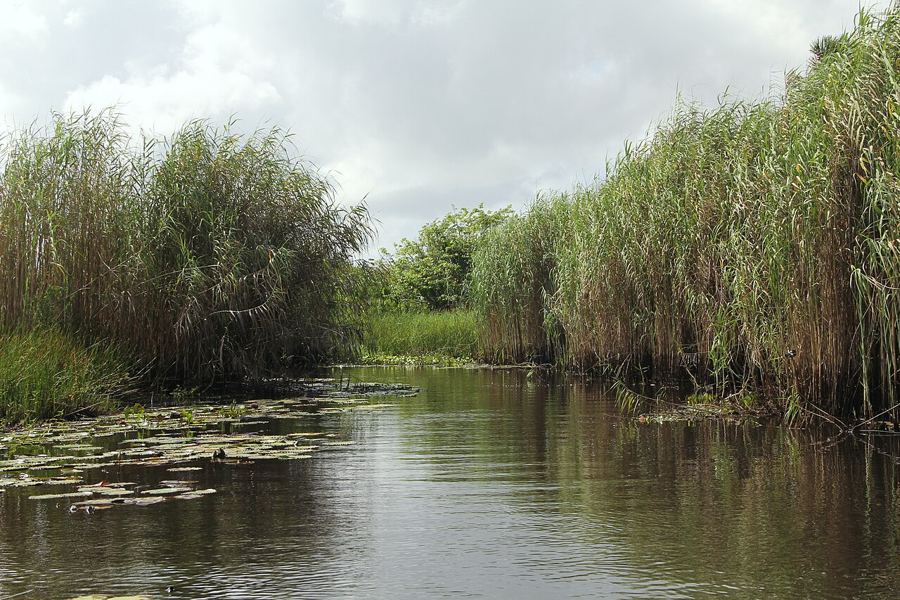 Another lime · East coastNariva Swamp, the great wetland of the east
Watching a turtle lay
When you are brought close, the scale of the animal is the first surprise. An adult female can be well over a metre and a half long, with a ridged, leathery back instead of a hard shell. She digs a body pit with her front flippers, then scoops a deep, neat chamber with her back flippers, working with surprising delicacy for something so large.
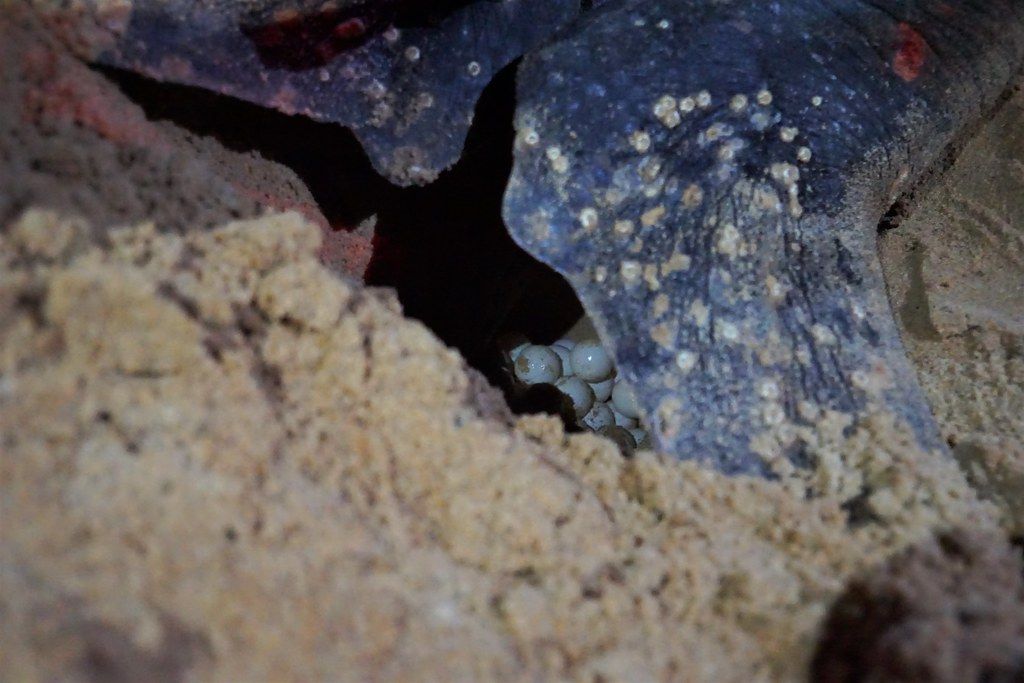
The eggs drop into the chamber in a steady stream, white and round, about the size of billiard balls. She often sheds tears from her eyes; they help clear salt and sand, rather than showing any distress. After laying she fills the hole and spends a long time throwing sand about to disguise the spot, before turning slowly back towards the sea. The whole process can take an hour or more.
Photography is the hardest part for many visitors. The rules on light mean that most phone pictures of a nesting turtle come out dark or blurred, and that is fine. Some guides may allow a brief, dim red light for a photo at the right moment; ask, and accept the answer. Many people find they enjoy the night more once they put the camera away and simply watch.
That slow return to the water, the great body pushing through the foam and then gone, is the moment most people remember.
Leatherbacks face many threats at sea, including fishing nets, plastic that looks like the jellyfish they eat, and boat strikes. On the beach, erosion, lights from buildings and roads, and disturbance from people all take a toll. Every careful visitor who follows the rules, and every nest left in peace, helps a little.
Hatchlings
About two months after laying, the eggs hatch. Hatchlings dig their way up through the sand together, usually at night, and then race for the sea. From around May into September you may see them on nesting beaches, sometimes in the early morning.
If you find hatchlings, let them make their own way. Do not pick them up, carry them to the water or shine lights on them. The crawl down the beach seems to help them, and only a tiny share survive to adulthood whatever we do. Keep dogs away, and tell a patrol member if you see hatchlings heading inland towards lights.
Matura or Grande Riviere
Matura lies on the east coast, within reach of the Toco road, and fits well with a day at the Rio Seco waterfall or the beaches of the northeast. Grande Riviere is further on, a small village at the far end of the north coast road from the east, and often has a very high density of nesting turtles on a short beach. The drive is long and winding, so many visitors stay overnight nearby rather than drive back in the dark.
Whichever beach you choose, start early, eat before you go, and expect to wait. The east coast is also home to the Nariva Swamp, if you want a second day with the wildlife of this side of the island. For the rest of the year, the guide to seasons and staying safe helps you plan around the weather.